

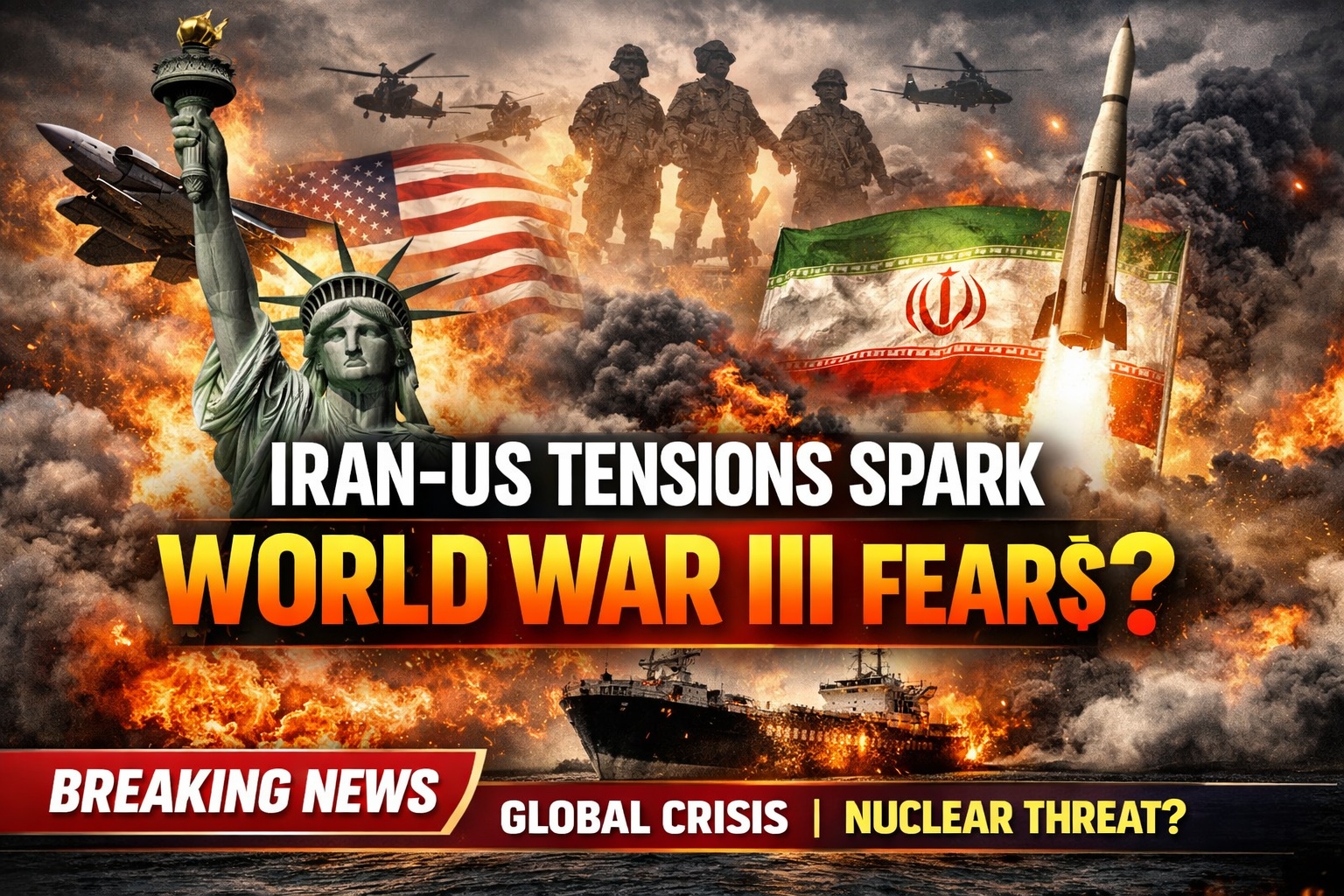

Rising Iran–US Tensions Spark Global Fears of Wider War 3, But Experts Urge Caution
By Sahi Khabar News Desk
March 5, 2026
Growing tensions between Iran and the United States have triggered widespread concern across global capitals, with some political commentators warning of the possibility of a broader international conflict. However, defense analysts and diplomatic observers say that while the situation remains volatile, a full-scale World War III is not imminent at this stage.
The latest escalation follows increased military exchanges in the Middle East, including reported missile and drone activity linked to regional flashpoints. The developments have intensified fears of a wider confrontation involving major powers.
Strategic Flashpoints Raise Alarm
One of the key concerns remains the security of the Strait of Hormuz — a narrow but critical oil transit route through which nearly 20% of global petroleum supply passes. Any disruption in the Strait could send global energy prices soaring and destabilize already fragile economies.
Security experts warn that if the conflict spills beyond Iran and U.S.-linked forces into neighboring territories, it could draw in regional actors and potentially test international alliances.
Russia and China Watching Closely
Moscow and Beijing have both criticized Washington’s posture in the region. While neither country has signaled direct military involvement, statements from Russian officials have suggested that continued escalation could “destabilize global security.” However, analysts emphasize that rhetoric does not automatically translate into military action.
“Great powers are extremely cautious about direct confrontation,” said a Middle East security analyst. “Economic interdependence and nuclear deterrence remain strong restraints.”
Regional War vs. World War
Military historians point out that a “world war” typically involves large-scale mobilization of multiple major powers under formal alliance structures — a situation not currently in place.
Unlike the conditions that led to World War I or World War II, there are no binding defense treaties compelling global powers to enter the conflict on opposing sides. Instead, the risk appears more aligned with regional escalation, proxy warfare, cyber operations, and economic retaliation.
Economic Markets React
Global markets have shown signs of nervousness, particularly in energy and commodities trading. Oil prices have fluctuated amid speculation over supply chain disruptions. Financial analysts warn that prolonged instability could add further inflationary pressure worldwide.
Diplomatic Efforts Continue
Despite the heated rhetoric, diplomatic channels remain active. International mediators, including European Union representatives and Gulf nations, are reportedly urging de-escalation to prevent further military confrontation.
The Bottom Line
While fears of World War III have gained traction online and in political commentary, defense experts caution against alarmism. The current crisis represents a serious geopolitical flashpoint, but there is no confirmed large-scale global military mobilization at this time.
The coming days will likely determine whether tensions cool through diplomacy — or intensify into a broader regional conflict with global consequences.