

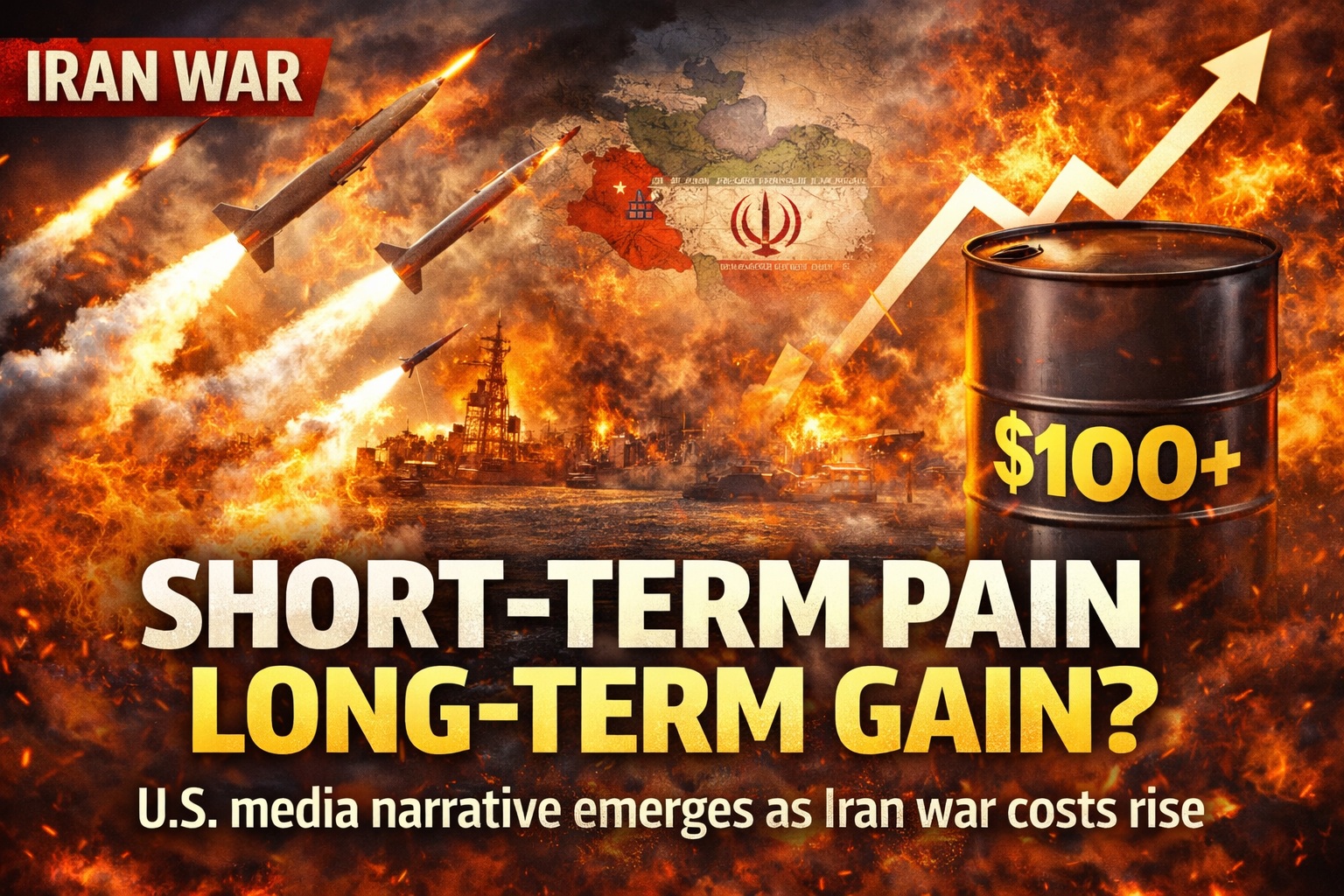

“Short-Term Pain, Long-Term Gain”: Phrase Emerges in U.S. Media as Iran War Costs Mount
A phrase increasingly heard across American television networks and political discussions is “short-term pain, long-term gain,” as commentators and officials attempt to explain the economic and strategic costs of the ongoing conflict involving Iran.
In recent days, the expression has appeared repeatedly in discussions on U.S. mainstream media while analysts debate the consequences of the military campaign and its impact on the global economy.
The phrase is being used to suggest that while the conflict may bring immediate economic strain—such as rising oil prices, market instability, and increased defense spending—the long-term outcome could strengthen the strategic position of the United States and its allies.
Economic Impact of the Conflict
The war has already begun affecting global energy markets, with oil prices experiencing sharp fluctuations amid concerns about supply disruptions in the Persian Gulf region. The strategic waterway known as the Strait of Hormuz remains a key route for global energy shipments, and any instability there has immediate consequences for international markets.
Some commentators argue that the economic pressure created by the conflict could weaken Iran’s regional influence over time. Others say the costs of the war may ultimately outweigh any strategic gains.
Political Messaging
Political analysts say the phrase “short-term pain, long-term gain” is also being used as a messaging strategy to prepare the public for economic difficulties linked to the conflict.
Supporters of the current policy say temporary hardship may be necessary to achieve long-term security goals, including preventing Iran from expanding its military capabilities and influence in the region.
The conflict has been closely associated with decisions taken by the administration of U.S. President Donald Trump, who has argued that confronting Iran is essential for long-term stability.
Critics Remain Skeptical
Critics, however, warn that such rhetoric may oversimplify the complex consequences of war. Economists and foreign policy experts note that conflicts often bring unpredictable outcomes, and the economic burden may fall heavily on ordinary citizens.
They argue that while the phrase suggests a clear path from sacrifice to success, history shows that wars can produce prolonged instability rather than guaranteed strategic gains.
Ongoing Debate
As the conflict continues, the phrase “short-term pain, long-term gain” has become a focal point in the broader debate about the costs and potential outcomes of the war.
Whether the hardships being discussed today will ultimately lead to the promised long-term benefits remains a question that policymakers, analysts, and the public will continue to debate in the months ahead.