

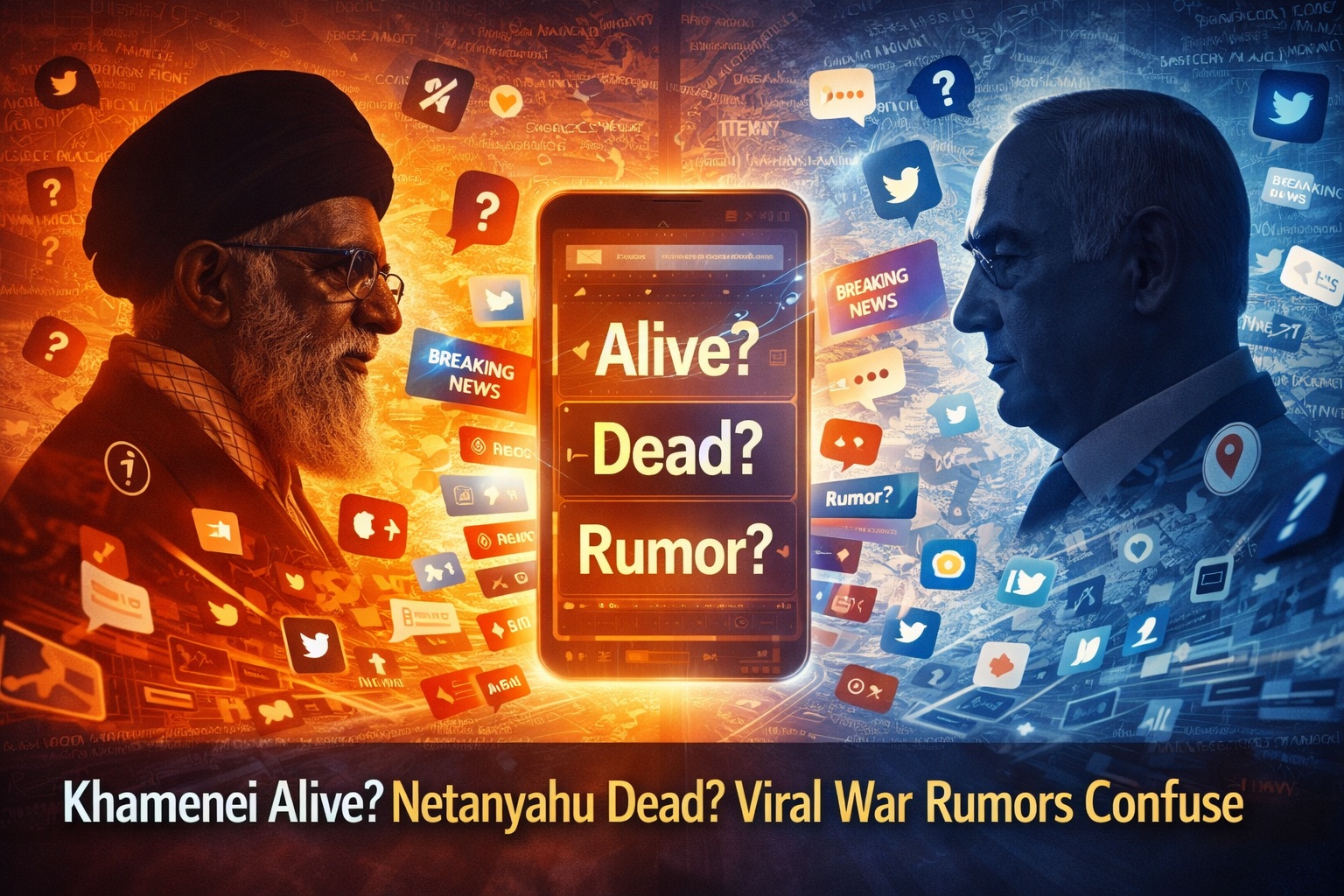

Khamenei Alive, Netanyahu Dead? Viral War Rumors Leave Internet Confused
How to Verify Viral Claims About Leaders’ Deaths: Rumors Around Khamenei and Netanyahu Spread Online
As the war in the Middle East intensifies, social media has been flooded with contradictory claims — some posts say Ayatollah Ali Khamenei is alive, while others claim **Benjamin Netanyahu has died. Experts warn that such rumors are common during wartime and are often fueled by misinformation, propaganda, or AI-generated content.
A Wave of Conflicting Claims
In recent days, social media platforms have seen a surge of viral posts claiming that Netanyahu was killed in an Iranian strike or that Khamenei was secretly alive despite reports of his death. Many of these posts are accompanied by dramatic images or videos that appear convincing at first glance.
However, fact-checkers say many of these visuals are AI-generated or taken from older footage, and they spread quickly during crises when reliable information is scarce. (Outlook India)
Analysts note that rumors about Netanyahu’s death have circulated widely online, but no credible international news organization has confirmed such claims. (Al Bawaba)
Why Misinformation Spreads During War
Researchers say wartime environments are particularly vulnerable to misinformation. AI-generated images, edited videos, and coordinated social media campaigns can easily create confusion among audiences.
Some viral images claiming to show dead or injured political leaders were later detected by AI-analysis tools and reverse-image searches as digitally generated or recycled from older sources. (Soch Fact Check)
Experts warn that misinformation can spread faster than fact-checks, especially when posts are shared by verified or popular accounts.
How to Check Whether a Viral Claim Is True
Media analysts recommend several steps before believing or sharing sensational claims online:
1. Check credible news outlets
Look for confirmation from major international media organizations or official government statements.
2. Verify the source
Posts from anonymous or newly created social media accounts are more likely to spread misinformation.
3. Use reverse-image search
Tools like Google Images or TinEye can reveal whether a photo actually comes from an older event.
4. Look for AI-generated clues
Strange details such as distorted hands, inconsistent shadows, or mismatched lip movements can indicate deepfakes.
5. Wait for official confirmation
In major geopolitical events, reliable confirmation usually comes from multiple independent sources.
A Growing Challenge in the “Deepfake Era”
Experts say the current information war shows how difficult it has become to distinguish truth from fiction online. Deepfakes and coordinated propaganda campaigns are increasingly used during conflicts to influence public opinion and spread confusion.
As a result, analysts urge readers to treat sensational claims — especially those about the deaths of political leaders — with caution until they are confirmed by trusted sources.
For now, many of the viral posts circulating about both leaders remain part of the broader misinformation battle unfolding alongside the real conflict.