

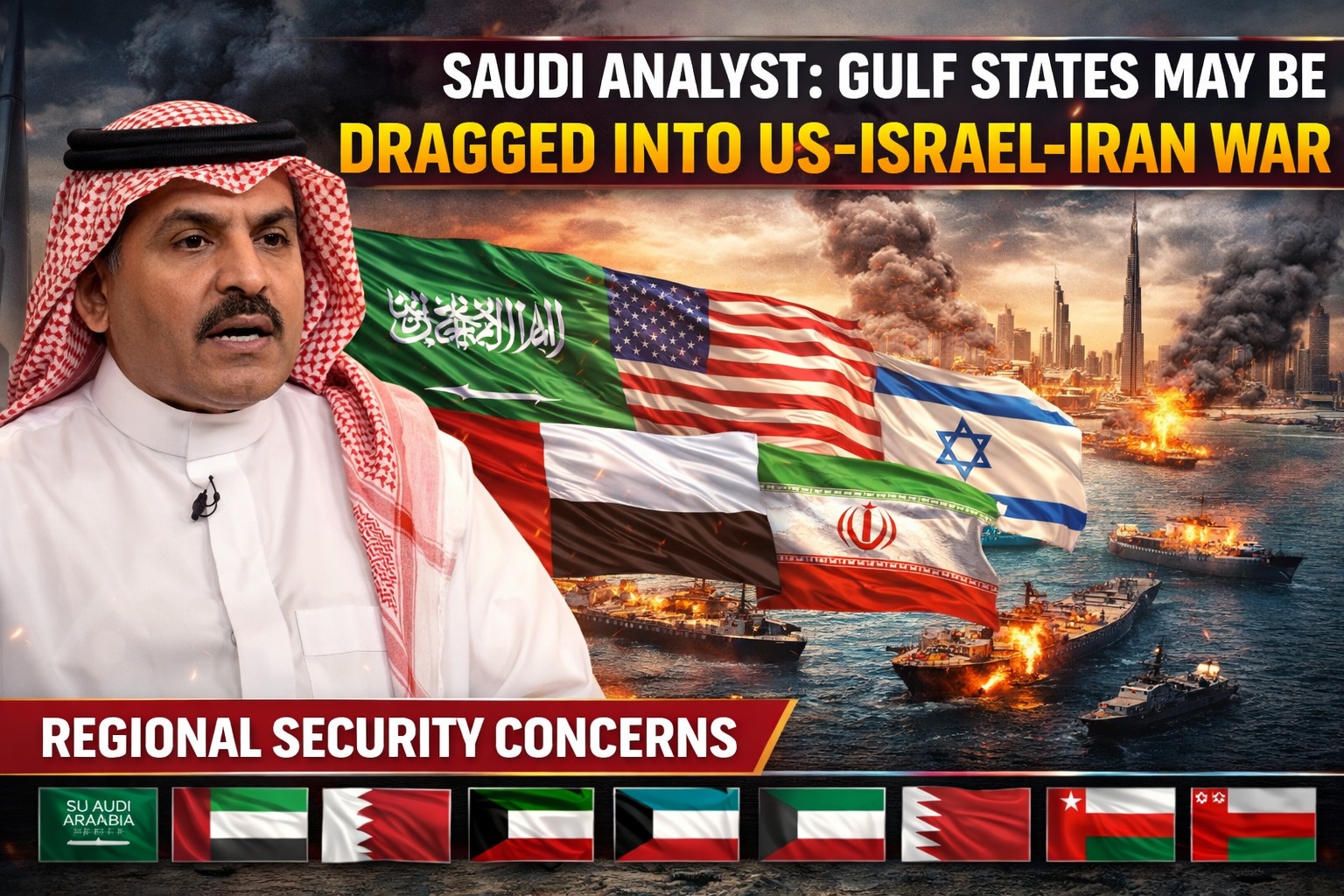

Saudi Analyst Warns Gulf States Could Be Drawn Into Wider Conflict Amid US–Israel–Iran War
March 5, 2026
A Saudi political analyst has warned that the ongoing conflict involving the United States, Israel and Iran could potentially drag Gulf countries into a dangerous regional confrontation without guaranteed long-term backing from Washington.
Speaking during a televised interview, Saudi analyst Adhwan al-Ahmari said some observers in the region fear the war could expand beyond its current scope and involve members of the Gulf Cooperation Council.
According to al-Ahmari, there is concern among Gulf analysts that regional allies could become deeply entangled in the conflict while the United States might eventually declare its military objectives achieved and reduce its direct involvement.
Concerns Over Regional Security
The comments come as tensions continue to rise between the Iran and the alliance of the United States and Israel, with military actions and political rhetoric intensifying across the Middle East.
Analysts say Gulf countries — including Saudi Arabia, United Arab Emirates, Qatar, Kuwait, Bahrain and Oman — could face significant risks if the conflict spreads to strategic infrastructure, shipping routes, or military bases across the Gulf region.
“Regional states are worried about what happens after the immediate military objectives are declared complete,” al-Ahmari said, suggesting the long-term strategic balance in the Gulf could shift dramatically.
Uncertainty About the War’s Endgame
The analyst’s remarks highlight growing questions about the long-term strategy behind the campaign against Iran and whether the current military pressure could trigger wider instability in the region.
Security experts say Gulf states rely heavily on U.S. security partnerships but remain cautious about being drawn into direct confrontation with Iran, which could expose critical oil infrastructure and maritime routes to retaliation.
Rising Regional Anxiety
The conflict has already heightened tensions across the Middle East, with governments closely monitoring the situation and calling for diplomatic efforts to prevent a broader war.
For many Gulf policymakers, the central concern is whether the conflict will remain limited or evolve into a prolonged regional struggle that could reshape the geopolitical landscape of the Middle East.
While governments in the region have not publicly endorsed such fears, analysts say the debate reflects increasing uncertainty about how the confrontation between Washington, Tel Aviv and Tehran may ultimately unfold.